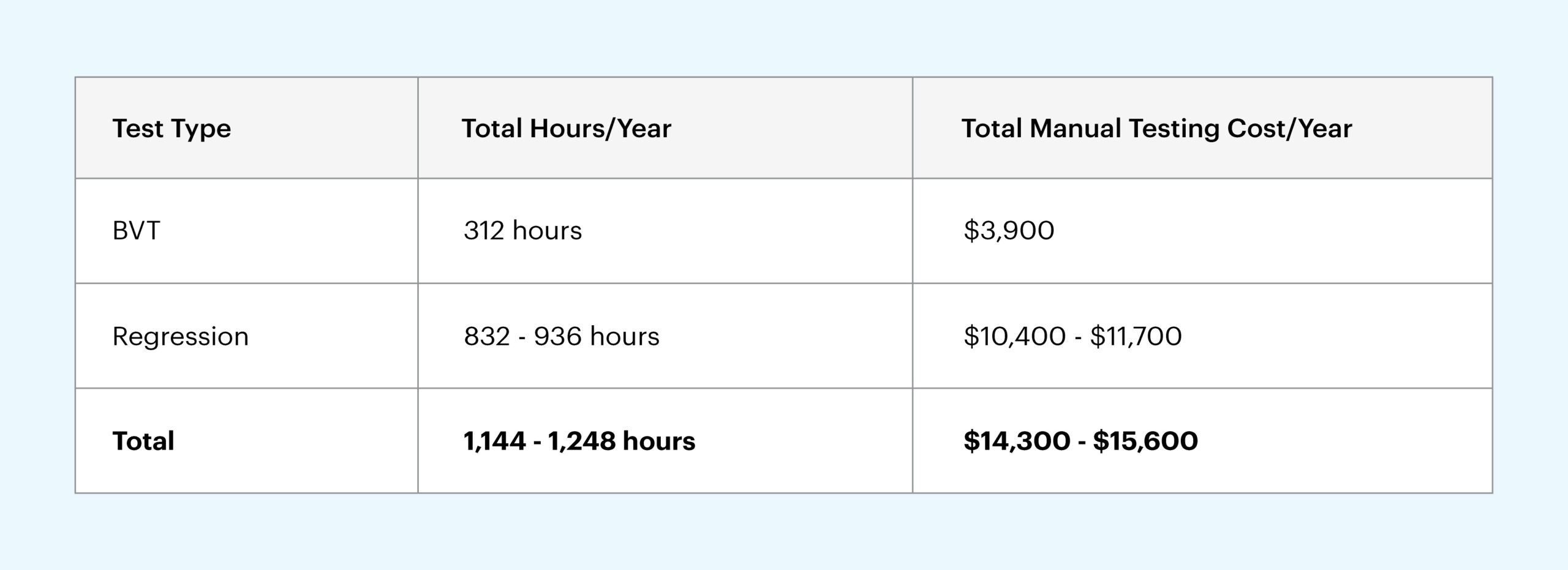
Recurring automation execution costs: The annual cost of executing the automation suite, using Azure Pipelines, is $504/year, which is a significantly lower expenditure compared to manual testing.
Cost savings calculation:

Annual Savings: $15,096 – $504 = $14592
The automation of BVT and Regression Testing results in annual savings of 90%, directly attributed to the use of automation.
…..
The automation of Build Verification Testing (BVT) and Regression Testing through the Fortest framework has led to impressive improvements in speed, cost-efficiency, and overall quality. BVT now completes in just 30 minutes, down from 6 hours manually, while regression testing is reduced to 8–10 hours instead of the usual 16–18. This has shaved off 1.5 days of testing per release. Additionally, the automation has freed up QA resources to focus on more valuable tasks like exploratory testing, ultimately enhancing product quality. With immediate feedback after every build, even outside of working hours, the development cycle is significantly faster. Overall, the implementation of Fortest has not only accelerated release times but also optimized resources and substantially reduced costs.
If you want to know how the Fortest framework can benefit your business, get in touch with our consultants.