Compared to USA counterparts, the vast majority of UK fashion retails are lagging behind when it comes to omnichannel retail and online marketplace integrations. Many brands rely on old-fashioned, rigid, long-term planning and do not make use of data and analytics that would allow them to be more agile in their strategy.
To keep up with the fashion industry’s fluidity, constantly-changing consumer behavior, and to stay afloat during crises like the ongoing pandemic, fashion brands must embrace innovative sales and distribution strategies.
An online marketplace is an e-commerce website or a mobile app that facilitates brands and customers to sell and buy products.
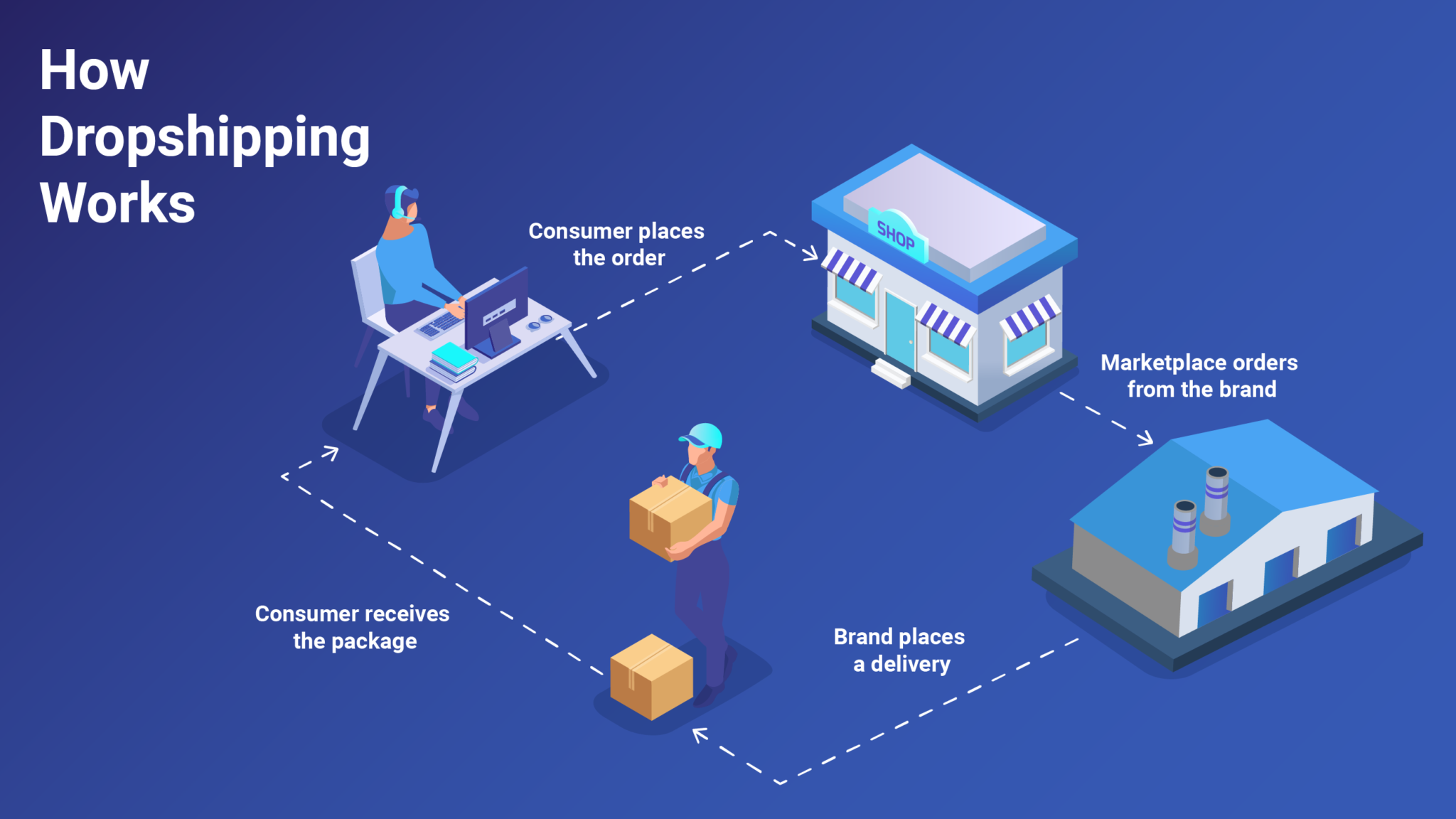
Once an e-commerce marketplace sells a product, it passes the customer order to a third-party supplier, who ships it directly to the consumer. The consumer is generally oblivious to this process, which happens in the background of the marketplace.
For example, the Germany-based upmarket marketplace Breuninger sells fashion and luxury products of more than 1000 brands, including Boss, Gucci, Burberry, Polo, and Karl Lagerfeld, through their online marketplace. When Breuninger sells a Burberry handbag, the product is shipped to the end consumer in Burberry packaging.
Figure 1: Dropshipping at a glance
Whether your company is going through a crisis or not, dropshipping and integrations can present many opportunities and increase the profitability of your fashion business.