
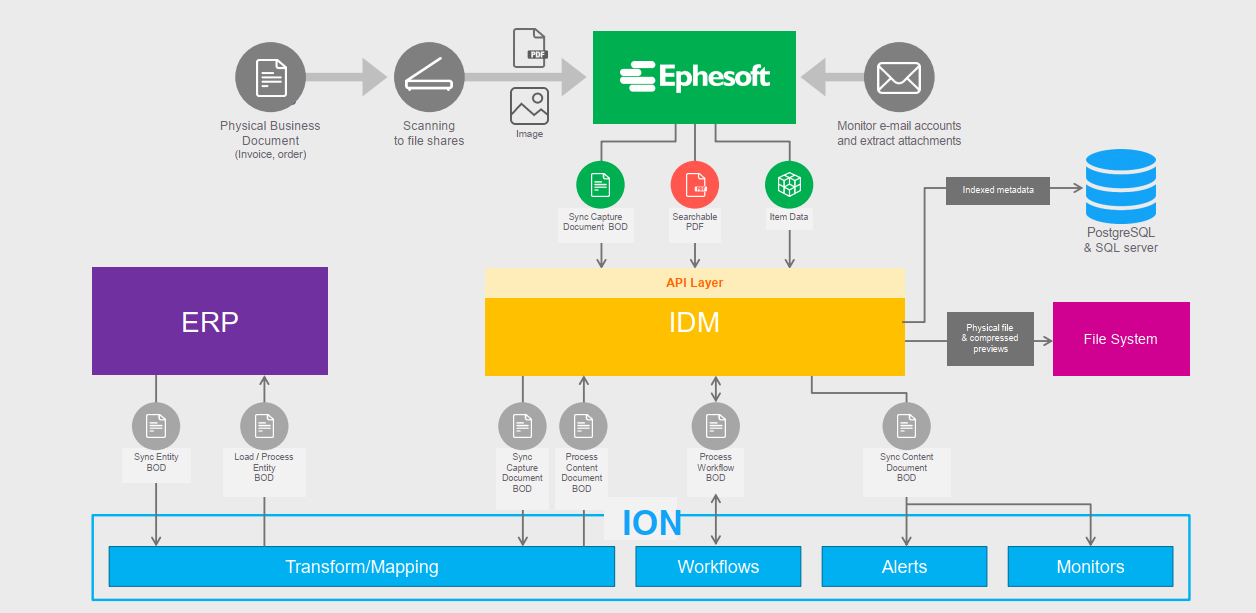
Manually capturing corporate documents is not an easy task, especially the related financial documents. For example, many companies still collect, validate, approve, and pay supplier invoices manually. The Accounts Payable department consumes valuable resources to carry out these tasks, yet encounters data entry errors, processing delays, and finds it difficult to track paperwork. With the IDM Capture, an add-on by Ephesoft, you can automatically capture vendor invoices and other related documents.
Manually or automatically capture any type of document and their data from any source and import them into IDM.



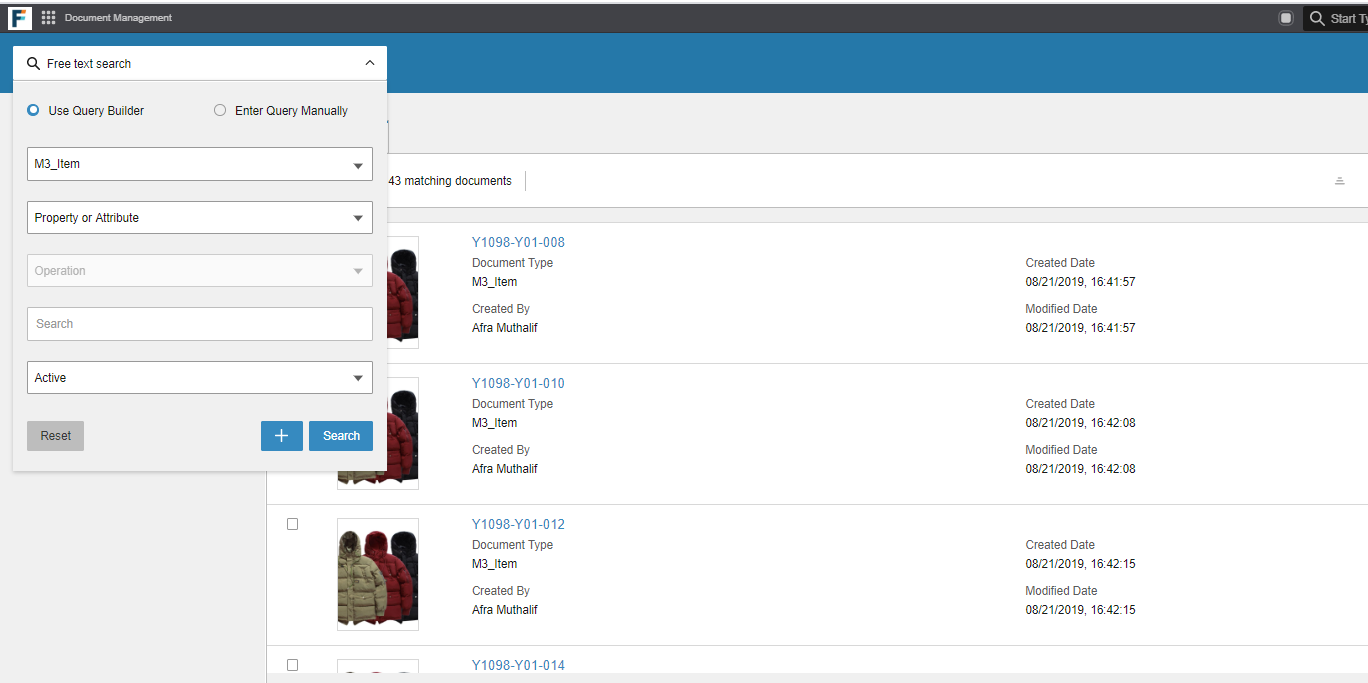
IDM uses multiple methods to search for a document:
Figure 1: Advanced Search
Once you find a document through search, you can view, export, print, or email them.