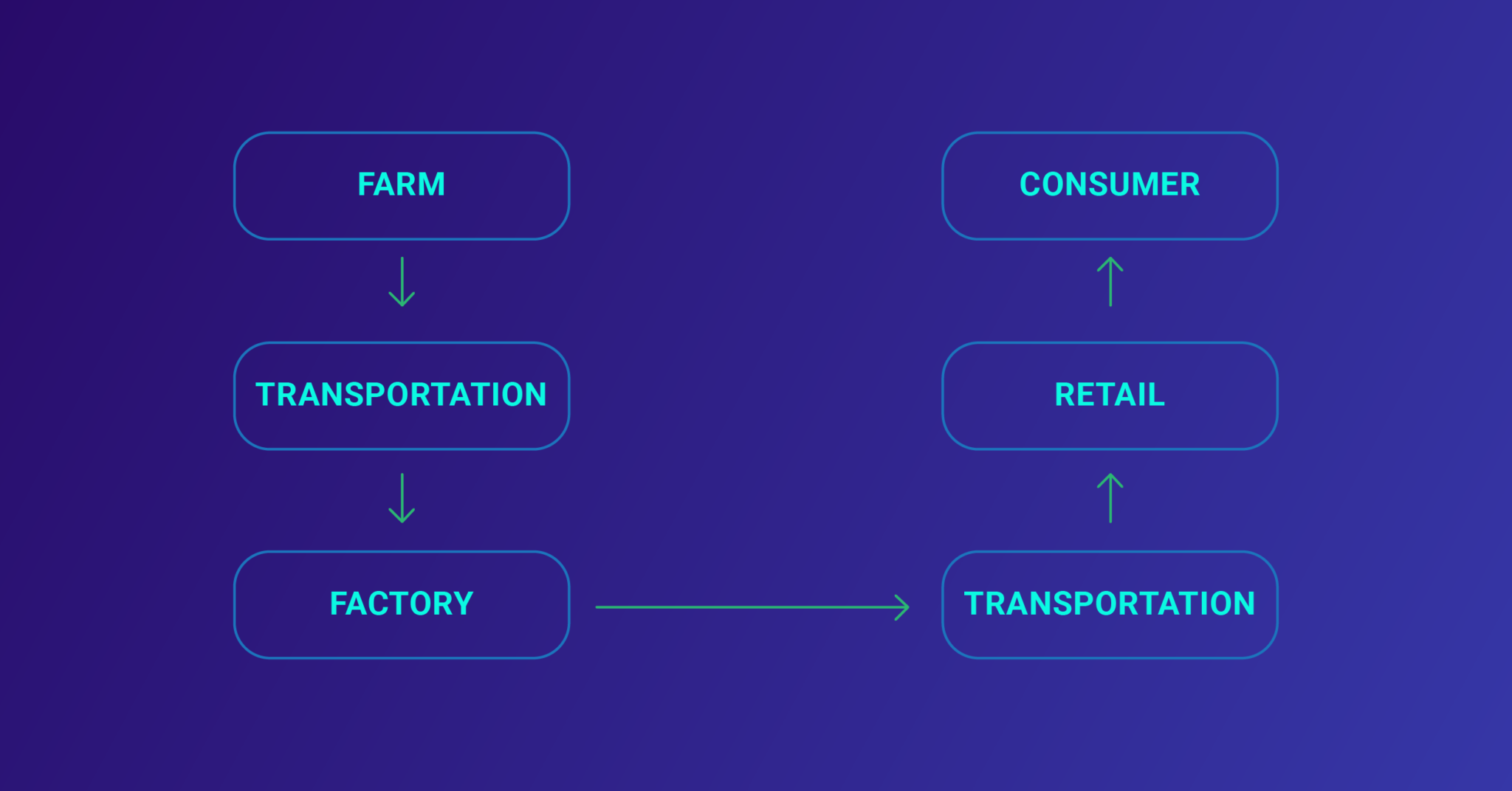
While sustainable and environment-friendly farming practices play a critical role, sustainability matters beyond the farm, throughout the food supply chain.
The sustainability goals in the food supply chain are under challenge due to the growing world population and resource scarcity. Adding to the woe, if ecosystems continue to degrade at the current rate, we will soon reach a point of no return.
On the farm, food manufacturers practice crop rotation to preserve soil health and to prevent soil erosion. Methane, a greenhouse gas emitted by dairy cows, affects the earth’s temperature and climate stability. A 2015 study showed that adding seaweed to cattle feed can significantly cut down methane emissions. Similarly, many novel technologies have been implemented to improve sustainability during transportation, warehousing, and retail.
For F&B companies, sustainability is no longer a trend but a business imperative for better profitability, long-term viability, and, most importantly, to safeguard the wellbeing of consumers. And to identify, plan, implement and optimize sustainable practices throughout the food supply chain, transparency and visibility play a key role.
In the next blog post, let’s explore how enterprises can use the cloud, business intelligence, analytics, and Industry 4.0 technologies to improve visibility, transparency, and traceability across the food supply chain.
References:
- Estimating Food Waste as Household Production Inefficiency, American Journal of Agricultural Economics
- Best Practice Guide: Improving supply chain transparency in modern food and beverage manufacturing, Infor
- Report: Incentivizing Food Systems Transformation, World Economic Forum in collaboration with McKinsey & Company